
Ayurvedic skin and hair care in Abu Dhabi
Ayurveda treats skin and hair as a reflection of digestion, blood and stress. Plans combine diet, herbal preparations and therapies such as Lepa, scalp oiling and Thakradhara.
- Session
- 45–75 minutes
- Typical course
- Plans of 2 to 8 weeks
- Prescribed by
- An Ayurvedic doctor, after consultation
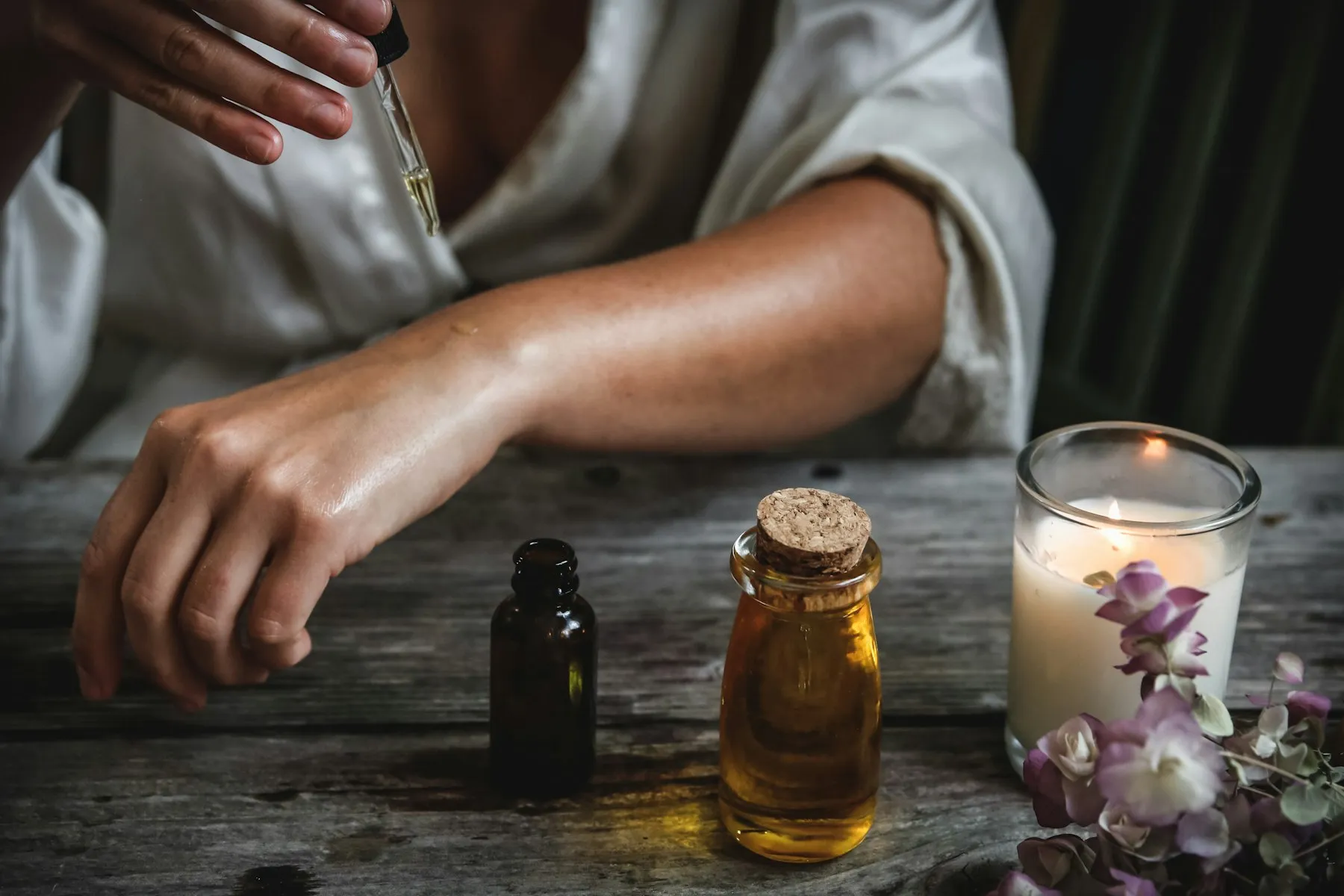
How Ayurveda approaches skin and hair
Ayurveda does not treat the skin in isolation. Classical texts link most skin and scalp complaints to digestion (agni), the quality of the blood (rakta) and the balance of the doshas, with stress and sleep as strong influences. A plan therefore usually starts with what you eat and when, adds herbal preparations, and only then uses hands-on therapies where the doctor believes they will help.
Who it is traditionally used for
Doctors at Samatvam see people with dry, itchy or flaring skin, oily or blemish-prone skin, dull complexion, dandruff and itchy scalp, thinning or falling hair, and skin that has never recovered from a stressful period. Ayurvedic care is offered to support these complaints alongside, not instead of, dermatology care where that is needed. Your doctor will assess what may help in your case.
Therapies the doctor may choose
- Lepa. Freshly ground herbal pastes applied to the skin for 20 to 30 minutes, then washed off.
- Udwarthanam. A brisk massage with dry herbal powders, traditionally used for congested or dull skin.
- Shiro Abhyanga. Warm medicated oil worked into the scalp and hair roots, often with gentle neck and shoulder work.
- Thakradhara. Medicated buttermilk poured across the forehead and scalp, a scalp-focused form of Shirodhara.
- Internal cleansing. For long-standing complaints the doctor may suggest a course of Panchakarma as the foundation.
What happens during a session
You are seen in private. For a Lepa, the paste is prepared fresh and applied to the affected area while you rest; for scalp therapies you sit or lie back while oil or buttermilk is worked in or poured. Disposable garments are provided. Sessions last 45 to 75 minutes.
How many sessions are typical
Skin and hair plans are measured in weeks rather than days. A typical plan runs two to eight weeks, with sessions once or several times a week and daily home routines in between. The doctor sets the rhythm and reviews you regularly.
Aftercare
- Follow the dietary guidance closely; it is usually the largest part of the plan.
- Use only the home preparations the doctor gives you on treated areas for the first day.
- Avoid strong sun, chlorinated pools and harsh cosmetics on the day of a session.
- Keep a simple note of changes to show the doctor at review.
Related
Often planned alongside
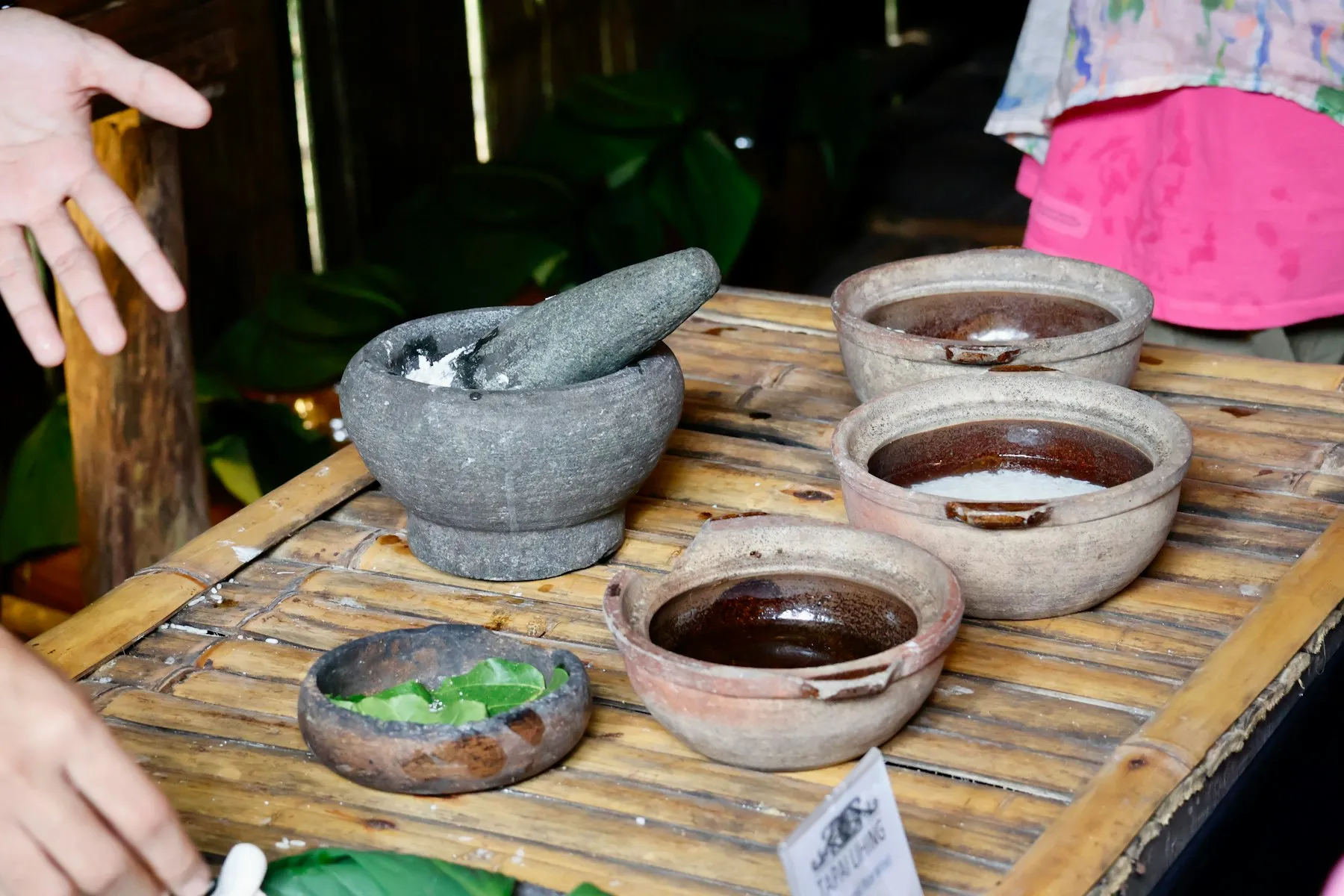
Panchakarma
Ayurveda's structured cleansing programme: a preparation phase, one or more elimination therapies and a rebuilding phase, planned and supervised by a doctor over one to three weeks.
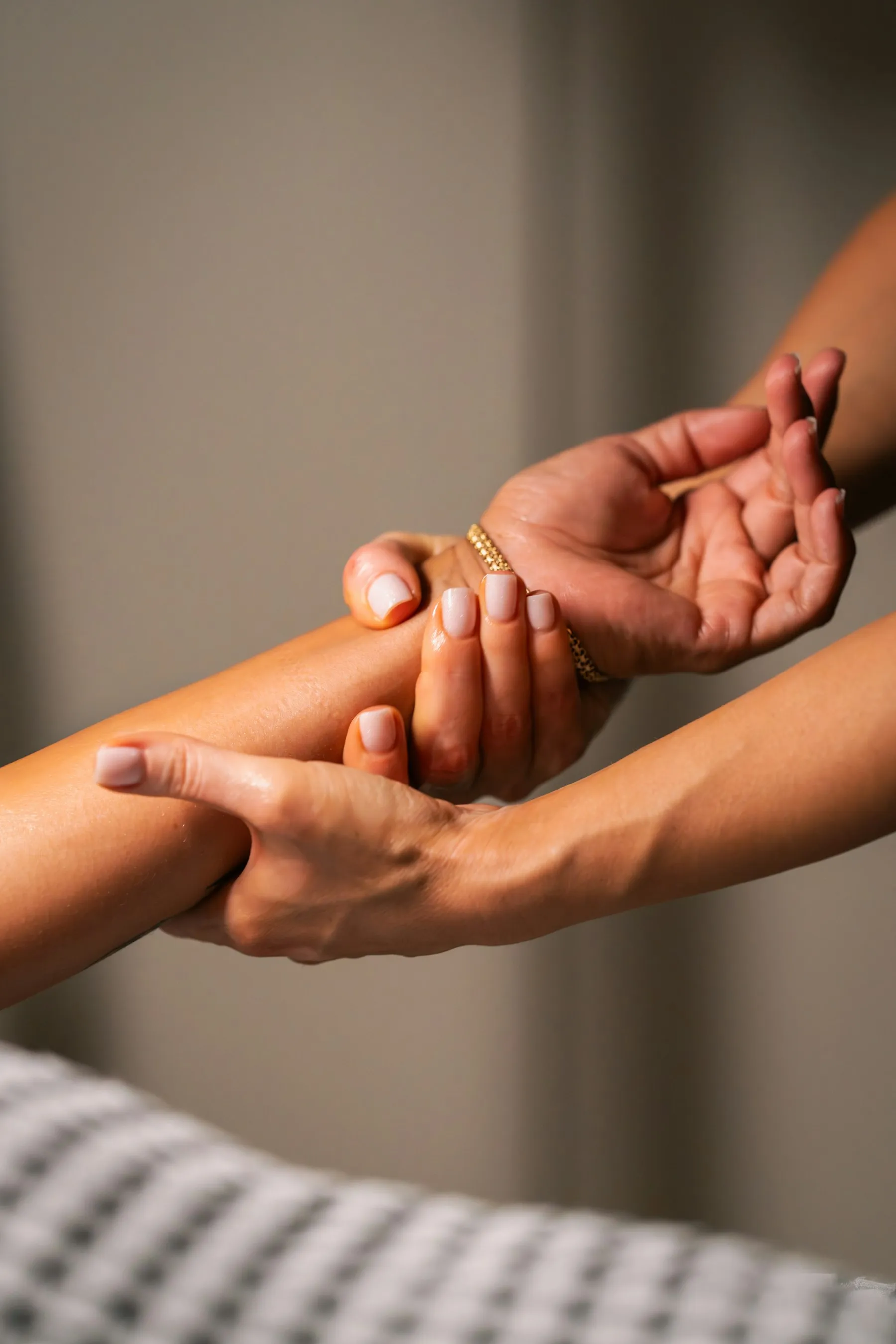
Abhyanga oil massage
A full-body massage with warm medicated oil chosen for your constitution, using long rhythmic strokes. Given on its own or as the daily first step of Panchakarma.
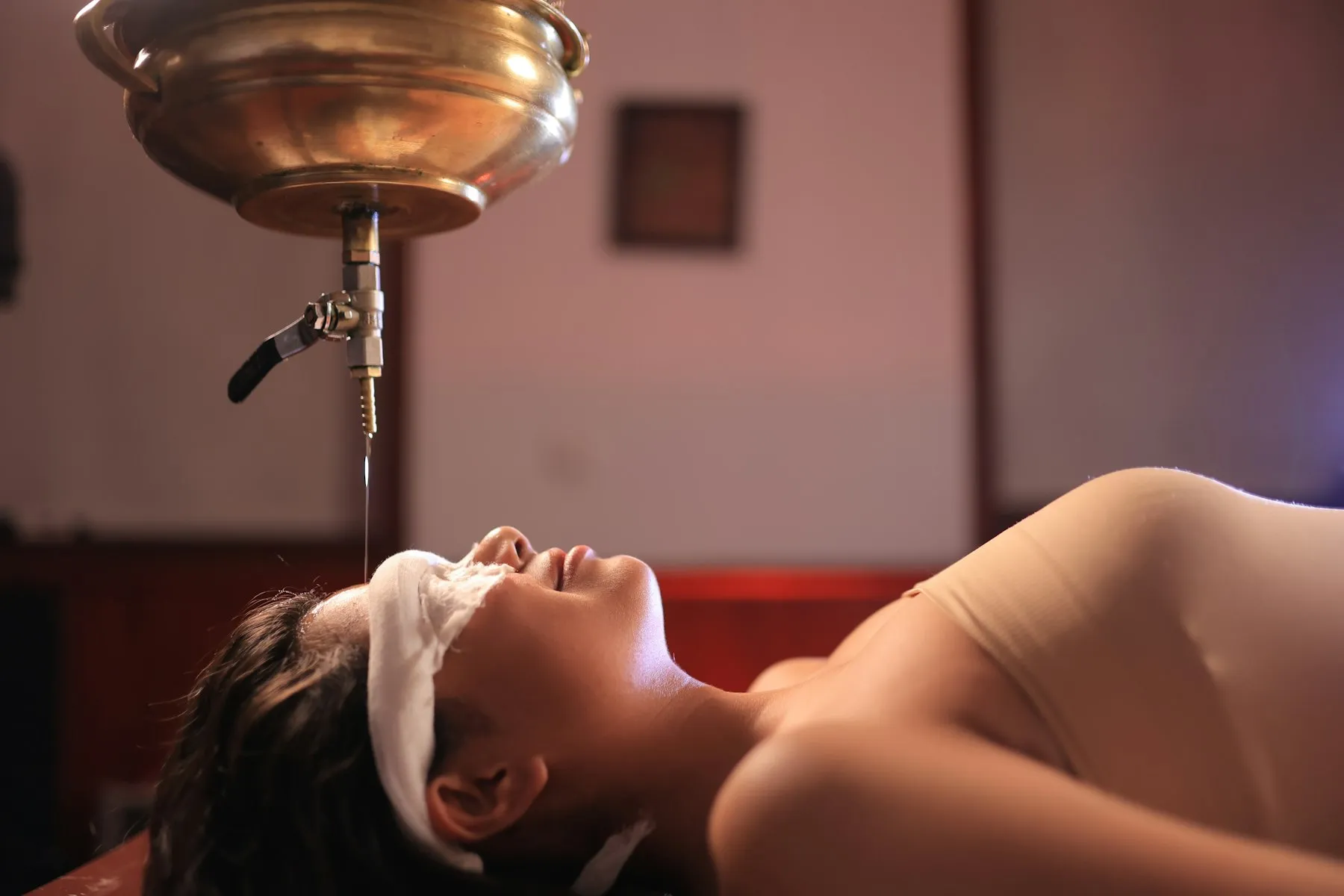
Shirodhara
A thin, unbroken stream of warm medicated liquid poured across the forehead for 30 to 45 minutes. Traditionally used to settle the mind, support sleep and ease tension.
Good to know
Questions about skin and hair
If your question is not here, ask us before you book. There is no obligation.
Can Ayurveda help with my skin condition?
We cannot say without seeing you, and we do not make promises. The doctor will examine your skin, ask about digestion, sleep, stress and diet, and explain what Ayurvedic care may support in your case. If your condition needs a dermatologist first, you will be told.
Do I need to stop my dermatology treatment?
No. Keep using anything prescribed by your dermatologist and tell the Ayurvedic doctor what it is. Plans are built to run alongside.
What is Thakradhara?
A version of Shirodhara using medicated buttermilk instead of oil, traditionally chosen for scalp complaints and for people who feel hot or agitated. It is poured across the forehead and scalp for 30 to 45 minutes.
Will the treatments stain or smell?
Herbal pastes and oils can mark light clothing, so wear something you do not mind. Most preparations have an earthy, herbal smell that washes off in the shower provided.
How long before I might see any change?
Skin and hair renew slowly. The doctor will usually ask for a plan of several weeks before judging, and will review you along the way. Diet and routine changes are usually as important as the sessions.